Sometimes it begins with nothing more than a single line on a news ticker… a moment when the feeling begins.
Imagine Eid without an announcement—an ordinary night passing like any other, without a notification, without a sound, without any content telling you that celebration is about to begin. Yet Eid has never truly been silent.
For centuries, it has had its own way of creating the moment. Every era has produced its own form of content—something that announces the beginning, awakens emotions, and brings hearts together at the same time.
The crescent moon has been sighted, and tomorrow will be the first day of Shawwal.
A short message, yet deeply powerful in its emotional impact—capable of transforming the entire atmosphere.
The moment it is seen or heard, streets come alive, homes grow busy, and the race to complete the final details begins—quick preparations, last-minute arrangements, and small traditions repeated every year, always carrying the same excitement and joy.
The News of Eid Was Once Heard, Not Seen
Before this announcement appeared on news tickers, it was something people heard rather than saw. In 1282 AH (1865), during the rule of Imam Faisal bin Turki bin Abdullah, the Ramadan cannon was fired from the top of a mountain in Riyadh. Its sound announced the arrival of Eid, and what people heard was not merely the echo of a cannon, but the beginning of a joy that united emotions in a single moment.
Later, the moment moved from the mountain to the screen. In 1405 AH (1985), the announcement confirming the sighting of the Shawwal crescent was broadcast on Channel One of Saudi Television, according to the earliest documentation recorded by sources. The segment was presented by Mansour Al-Khudairi, turning the Eid announcement into content watched inside every home.
With this transformation, people began to feel a strong attachment to waiting for the Eid announcement on Saudi television. It was no longer merely news to be received; it became a moment people anticipated and shared again, becoming the first gateway to the feeling of Eid.
Where Do We Hear Eid Today?
Today, channels are no longer limited to television. There are personal channels, individual accounts, and social media platforms broadcasting content at the same moment. Eid is no longer announced by a single source; it now appears on thousands of screens at once. Every account has become a channel, and every person can share Eid content.
Eid-related content has also become an important official element for many accounts, most notably the official account of the Custodian of the Two Holy Mosques, King Salman bin Abdulaziz, as well as government entities, ministries, and senior officials. They treat Eid content as an official and influential part of their communication. A digital greeting, a specially designed visual, or a congratulatory video—all are carefully crafted messages reflecting presence and direct engagement with society. Eid content is no longer merely celebratory; it has become part of official public communication.
How Do We Share the Feeling Before We Even Experience It?
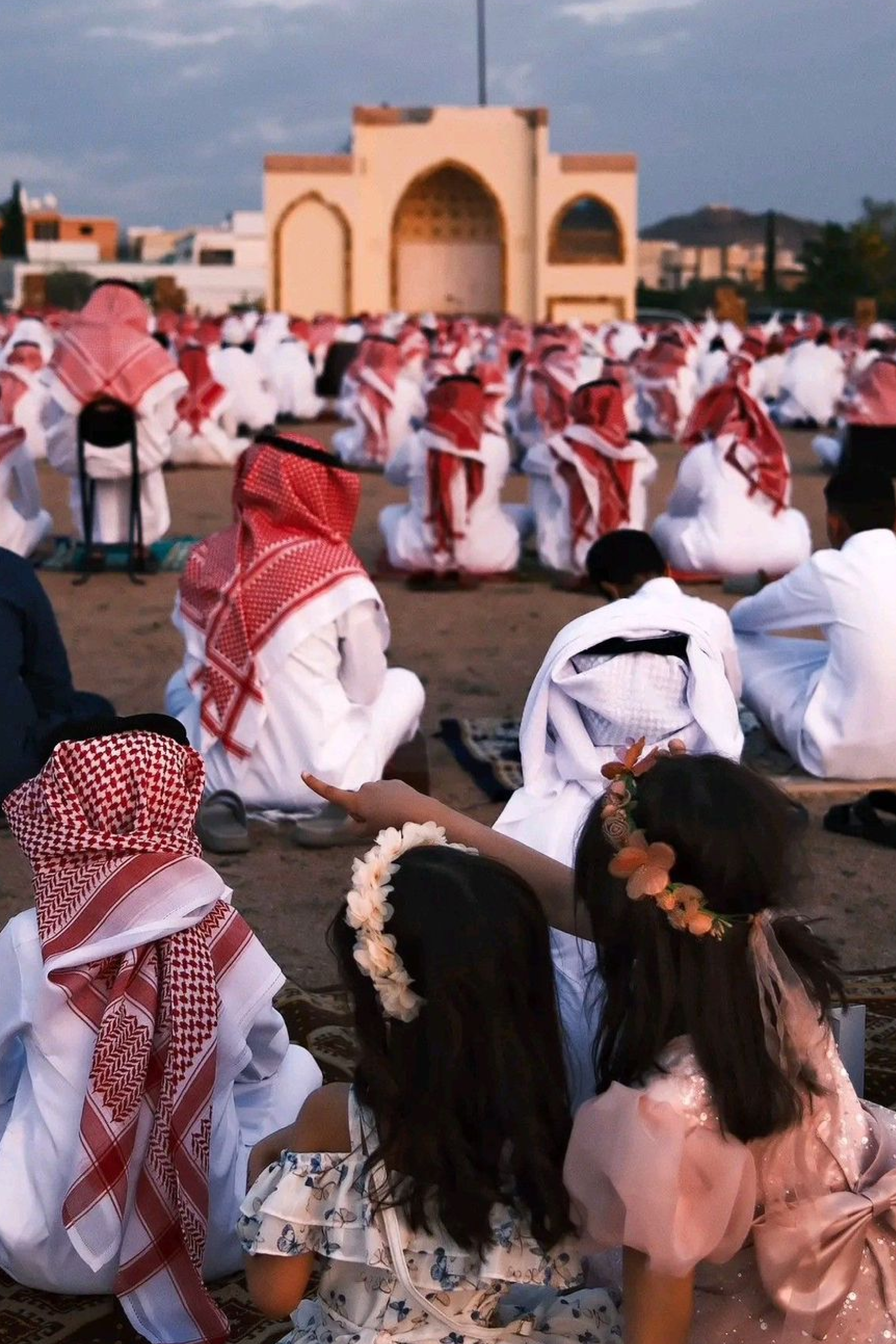
When a moment becomes content, sharing begins even before the experience itself. As soon as the takbeerat begin, greetings spread through phones—video calls, photos, and Eid messages traveling within seconds, while clips from the Eid prayer are posted instantly. You may be in one city while watching your family in another as if you were right beside them, sharing the moment through sound and image and laughing together. From this perspective, words and messages have become a true bridge—bringing distant loved ones closer and giving those who cannot attend the chance to fully experience the atmosphere.
We Celebrate Eid Twice…
Once through a message, once through meeting in person—and again when the meeting itself becomes content that can be revisited. Moments no longer end when the visit ends. They continue through sharing, saving, and revisiting them at any time. This is where what might be called the “digital Eid” begins to take shape. Content creates a memory that extends beyond the day itself: photos are saved, videos replayed, and memories return every year through new notifications labeled “Memories,” bringing the same feeling back again.
From a cannon whose echo once resonated across the city, to a televised announcement, and finally to instant content reaching every individual in their pocket—the tools have changed, yet the anticipation remains the same. Content did not create nostalgia from nothing; rather, it expanded its reach, extended the life of the moment, and allowed us to experience the first day of Shawwal more than once: once in reality… and once again when it returns through content.
(Source: Saudipedia – The Ramadan Cannon in Saudi Arabia)