A Cultural Journey Through Memory, Poetry, and Heritage
What Has Kept Camels Alive in Arab Memory?
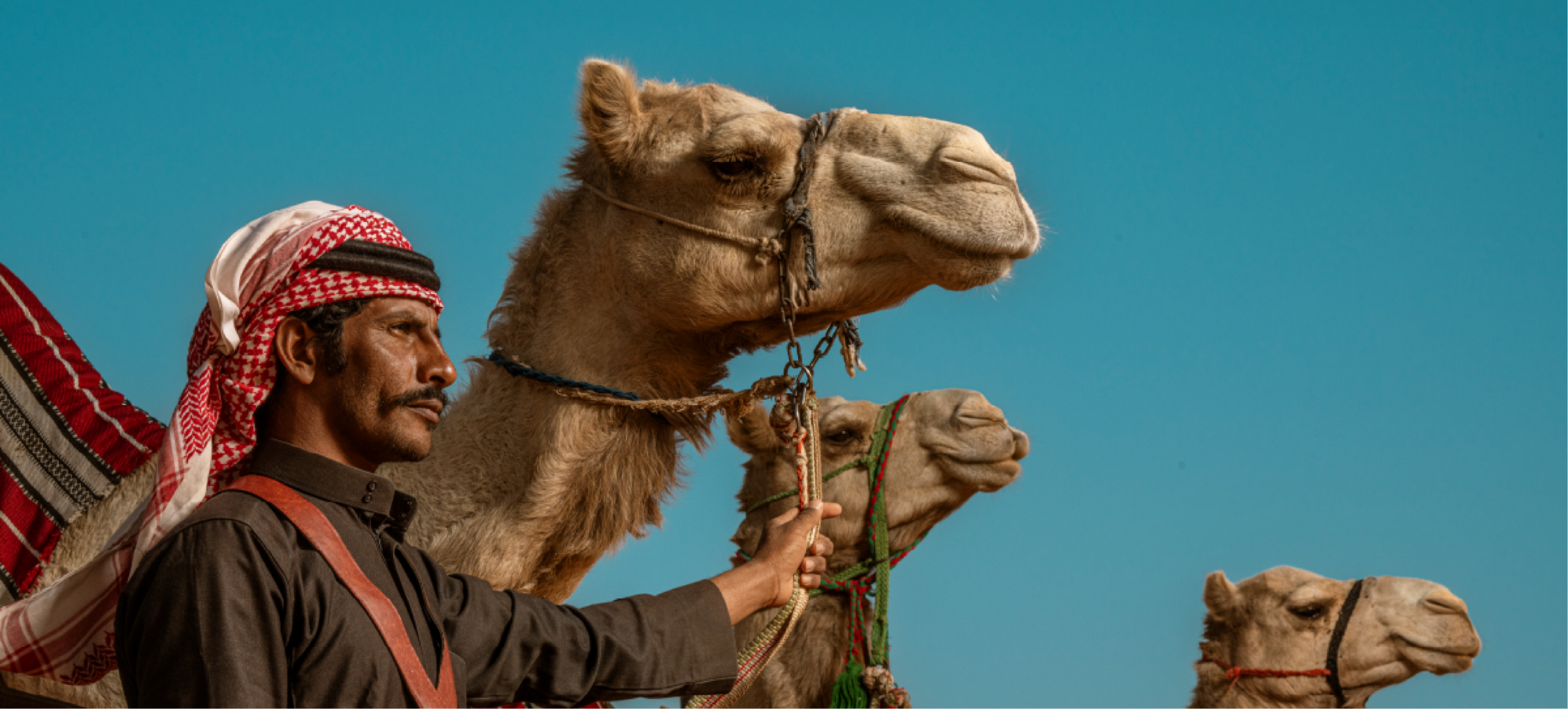
Imagine a living creature that has crossed centuries without ever fading from the Arab imagination. There were no cameras to document its features and no digital platforms to share its stories, yet it remained vividly present in poetry, proverbs, and oral traditions passed down from one generation to the next.
Perhaps it is because their relationship with humans extended far beyond transportation and livelihood. Camels became woven into language, literature, and cultural heritage, making them one of the most enduring symbols of Arab culture.
When Camels Were Mentioned in the Qur’an
One of the most profound references to camels appears in the Holy Qur’an, where Allah Almighty says: “Then do they not look at the camels—how they are created?” (Qur’an 88:17). The mention of camels reflects their significance in Arab and Islamic culture and highlights their role in daily life throughout history.
How Poetry Preserved the Image of Camels
Long before modern documentation existed, poetry served as a record of life and experience. Camels occupied a prominent place in this literary tradition. One example appears in the poetry of Ibn Laboun, who vividly portrayed the endurance and emotions of riding camels during long desert journeys.
“These she-camels, when they catch sight of the drinking vessel, cry out in longing from separation, their mournful calls echoing like the creaking of wheels.”
The camel here becomes more than a means of transport; it becomes part of the emotional narrative itself.
Messages Carried Across the Desert
In earlier times, messages crossed deserts with caravans before reaching their recipients. Camels accompanied travelers across remote landscapes and carried communication between regions long before modern technologies existed. As a result, they became deeply associated with journeys, caravans, and connection.
Qualities Preserved in Proverbs
Arab proverbs captured many of the qualities associated with camels. Expressions such as “More patient than a camel” and “More precious than red camels” reflect the admiration people held for their endurance and value.
How Are Their Stories Told Today?
Although the means of storytelling have changed, the heritage remains alive. Photography, documentaries, media coverage, and specialized festivals now present new perspectives on the relationship between camels and humans.
From a Qur’anic verse that inspires reflection to digital content that reaches millions within moments, camels continue to inspire storytellers and remain an inseparable part of Arab cultural memory.
Sources
• The Holy Qur’an, Surah Al-Ghashiyah (88:17)
• Year of the Camel Guide 2024, Saudi Ministry of Culture